Monday, May 18, 2009

Scientific Breakthrough By Malaysia's Oil Palm Company


Malaysia's Oil Palm Company, Sime Darby Technology Centre (SDTC) has become the first oil company to sequence the genome of oil palm. This great success is a collaboration project between STDC and Bio-informatics company, Synamatix Sdn. Bhd.


STDC started this oil palm genome project in 2003, then STDC continued to collaborate with Synamatix Sdn. Bhd in 2005 and finally both companies have successfully sequenced the genome in July 2008.


For the sequencing project, STDC has completely sequenced, assembled and annotated two varieties of the oil palm genomes (which are the Dura and the Tenera) with 30 times coverage as repeated the sequence over 30 times and with 93.8% completeness.


With this great effort by STDC, this will enable the identification of several markers of oil palm genome that might give rise some beneficial characteristic for the crops. Examples are
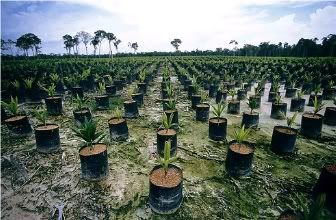
disease resistant, drought tolerant and salinity tolerant. Moreover, these markers will lead to better production of oil with more nutrient content for the better consumption of consumers. Moreover, these markers will help the company to create an alternative method for the company as to increase the yield of the crop instead of clearing the forest in order to give a way for palm plantation.


With this great breakthrough, Malaysians future biotechnologist in Taylor's University College are driven forward to attain such breakthrough in order to explore the unlimited world of genome.


Source: Sime Darby Makes Important Discovery Im Oil Palm Genome, 12 May 2009
<
http://www.simedarby.com/Sime_Darby_Makes_Important_Discovery_in_Oil_Palm_Genome.aspx>
Posted by: NADZIRAH BINTI HAJI DAMIRI_42101644

Potential gene expression control in mammals


A glowing liver Mouse liver containing infrared fluorescent protein (IFP) glows in false colour in this infrared image. The image data was also used to create a tilted, three-dimensional view on the right to show the liver from a different angle. (Scientific American 2009)


Roger Tsien from and colleagues from the University of California have refined a fluorescent protein that could potentially be used to switch on genes in animals. Fluorescent proteins, which absorb and release light, are used as markers in a cell to label or observe cell cycle. The existing green fluorescent protein can only be excited at short wavelengths of light and cannot go through tissue. The fluorescent protein that Tsien has developed can be seen in a live animal because it absorbs light at close to an infrared wavelength.

The real capability lies in the power of this protein to control gene expression. Tsien explains the use of this in an example with a mouse. If behaviour is what you were interested in, you could use the protein to switch on a particular gene which controls brain function by exciting the protein with infrared light. The proteins would change the absorbed light into energy that would be used to switch a gene on or off. Although this type of attempt to control gene expression is not underway, it will not be very long until it is.

Nogrady. B, May 2009, Deep in the Red: Using Infrared to Watch What Goes On in a Living Body, Scientific American.

Sea Urchins Reveal Medical Mysteries


Scientists have found that sea urchins although being tiny spiky, spineless, invertebrates share a common ancestor with humans and are genetically related to us. They are one of few invertebrates on our branch of the evolutionary tree sharing more genes with humans than fruit flies and worms. When comparing the two genomes there are many amino acid sequences that are a perfect match. In fact even though sea urchins look nothing like us, they share more than 7000 genes with humans and biologists are now using them to learn how to treat and prevent diseases in humans better. It was found that some of the genes of the sea urchin involve such diseases as Alzheimer’s, Parkinson’s disease, muscular dystrophy and many cancer related genes and are thought to hold the key to curing these and many other human diseases . Infertility is another problem that sea urchins maybe able to solve as they can produce up to around 20 million eggs at a time.
Scientists have recently completed sequencing the sea urchins genome which consists of 23000 genes 7000 as said above are. Interestingly, although they don't have eyes, ears or a nose, but they have the genes humans have for vision, hearing and smelling. Sea urchins are known for their strong immune system and long life spans so scientists are interested in how their immune system works in the hope of finding new antibiotics and antiviral compounds to fight infectious diseases. With a complete map of a sea urchins DNA they can better understand how genes work, so when diseases like cancer strike, maybe someday doctors will know exactly how to treat and even prevent them. The use of these creatures is also very convenient as they are readily available as they reproduce quicker than many other animals and researchers can produce practically unlimited amounts of material.
References
http://www.sciencedaily.com/videos/2007/0304-sea_urchins_reveal_medical_mysteries.htm

Sea Urchins Reveal Medical Mysteries


Scientists have found that sea urchins although being tiny spiky, spineless, invertebrates share a common ancestor with humans and are genetically related to us. They are one of few invertebrates on our branch of the evolutionary tree sharing more genes with humans than fruit flies and worms. When comparing the two genomes there are many amino acid sequences that are a perfect match. In fact even though sea urchins look nothing like us, they share more than 7000 genes with humans and biologists are now using them to learn how to treat and prevent diseases in humans better. It was found that some of the genes of the sea urchin involve such diseases as Alzheimer’s, Parkinson’s disease, muscular dystrophy and many cancer related genes and are thought to hold the key to curing these and many other human diseases . Infertility is another problem that sea urchins maybe able to solve as they can produce up to around 20 million eggs at a time.
Scientists have recently completed sequencing the sea urchins genome which consists of 23000 genes 7000 as said above are. Interestingly, although they don't have eyes, ears or a nose, but they have the genes humans have for vision, hearing and smelling. Sea urchins are known for their strong immune system and long life spans so scientists are interested in how their immune system works in the hope of finding new antibiotics and antiviral compounds to fight infectious diseases. With a complete map of a sea urchins DNA they can better understand how genes work, so when diseases like cancer strike, maybe someday doctors will know exactly how to treat and even prevent them. The use of these creatures is also very convenient as they are readily available as they reproduce quicker than many other animals and researchers can produce practically unlimited amounts of material.

References
http://www.sciencedaily.com/videos/2007/0304-sea_urchins_reveal_medical_mysteries.htm

'Glowing' jellyfish grabs Nobel


A intelligent move made by two American researchers and one Japanese-born scientist awarded them with a share of the chemistry Nobel Prize. The move was nothing more than a smart trick on a jelly fish.


Scientists use GFP to study mosquitoes and malaria (Above)

Martin Chalfie, Roger Tsien and Osamu Shimomura Shimomura made it possible to make use of the genetic mechanism responsible for luminosity in the marine creatures. Today, countless researches and scientist make use of this technique. These glowing indicators have the ability to show how cancer cells spread through tissue.

Jellyfish glow under blue and UV light due to the protein structure in their tissues. This is referred to as green fluorescent protein (GFP). Firstly, scientist Shimomura made the critical step by isolating GFP (1962). Later through the decades, in the 90’s, the value of “the luminous genetic tag” was recognized. GFP, has now become a usual tool in the laboratories. It aids in fundamental research and it has a significant effect on the field of genetic engineering.

It is due to these findings, that, the popular media stories presented "glowing" rabbits, butterflies, pigs emerging from laboratories.

An Example of it's use:

Scientists working on the modification of a plant or an animal will often use the gene responsible for the glow. Fluorescence properties of the gene will then tell the scientists if the modification has been taken up successfully or not, significantly increasing the efficiency of the whole research.

DNA BOXES HOLD A WEALTH OF NEW OPPORTUNITIES

A recent article in Nature documents how a Danish multidisciplinary team of researchers created 3D nano-sized boxes out of single long strands of DNA. The researchers were then able to lock or unlock these boxes in response to ‘keys’ made from short external strands of DNA. The ability to regulate access to the boxes according to various forms of keys has opened a range of their possible applications from sensors to accurate drug delivery systems.


DNA ‘origami’


The 3D DNA boxes were formed via a technique known as DNA ‘origami’. It utilises the characteristic of complementary DNA to self-recognise and ‘pair up’ together. In DNA ‘origami’, short segments of complementary DNA (oligonucleotides) are used as ‘staples’ to join the target areas of DNA together, and fold the DNA into the desired shape. This process is aided by using a recently developed design software program that when given the desired shape, selects and outputs the some 250 oligonucleotides that will assemble it.

Nevertheless, research into this field had been previously limited to 2D structures, and to open ended tubes. The Danish team developed the technique further to create their six faced box and lid. In their case the researchers used a circular strand of DNA from the bacteriophage M13. After using the program to calculate the appropriate oglionucleotide combination, they mixed the 220 ‘staples’ with the bacteriophage DNA and heated them. The boxes then self-assembled by first creating the walls and then joining them together. The researchers were able to confirm this shape through cryogenic transmission electron microscopy and small angle X ray scattering.


‘Lock’ and ‘Key’ mechanism


What makes this research truly exciting and potentially useful, however, was the discovery that a ‘lock’ sequence of DNA could be attached via an oglionucleotide that joined the lid and the box shut and which contained a ‘sticky-end’ where a supplied segment of ‘key’ DNA could attach and ‘unlock’ the box by strand displacement. Furthermore, a number of ‘locks’ with varying keys could be attached for further complexity. The state of the lid was detected by fluorescent activity (closed – red, open – green). This programmability and control of the inner compartment of the box therefore is determined by the presence of the external ‘key’ DNA stimuli.


This control via an external stimuli means that these boxes have a range of possible and interesting applications. The foremost of these is that they could be used for controlled release, as in the case of drug delivery. Tiny molecules of drugs could be released in response to a specific external stimuli. Alternatively, the boxes could be used as a sensor for something that induces the box to change state.


DIY DNA:
The design software program used by the research team can be found and download online http://www.cdna.dk/origami/ .

REFERENCES:
Andersen, E. S. et al. Nature 459, 73–76 (2009).

HIV Vaccine From Plants


A Swedish research team from Örebro University has successfully altered the genes in some plants to aid in the production of an HIV vaccine. The plants have been genetically modified to produce a protein (p24) which is common to all HIV viruses. This is particularly important as the HIV virus has many variants due to its rapid rate of mutation. The researchers utilised a bacterium vector to insert the viral genetic material into the plant’s DNA as viral genetic material (RNA) cannot be directly inserted into the plant’s DNA sequence.

The plants producing this protein are then fed to mice. The immune systems of the mice then developed antibodies against the protein they had consumed. Researchers are hoping for a similar result in antibody production in humans. They have nominated the carrot as an ideal plant to genetically modify to express the genes producing the protein as they can be eaten raw which is reduces the risk of damage to the protein from heating. These findings have enormous potential in terms of providing an effective and inexpensive vaccine against a wide-spread disease. The findings can be found in the academic dissertation by Ingrid Lindh of Örebro University.

Source
http://www.sciencedaily.com/releases/2009/05/090514084103.htm (article)
http://www.healthinitiative.org/HTML/hiv/firstcontact/hivbig.htm (picture)

Published by 42062615